
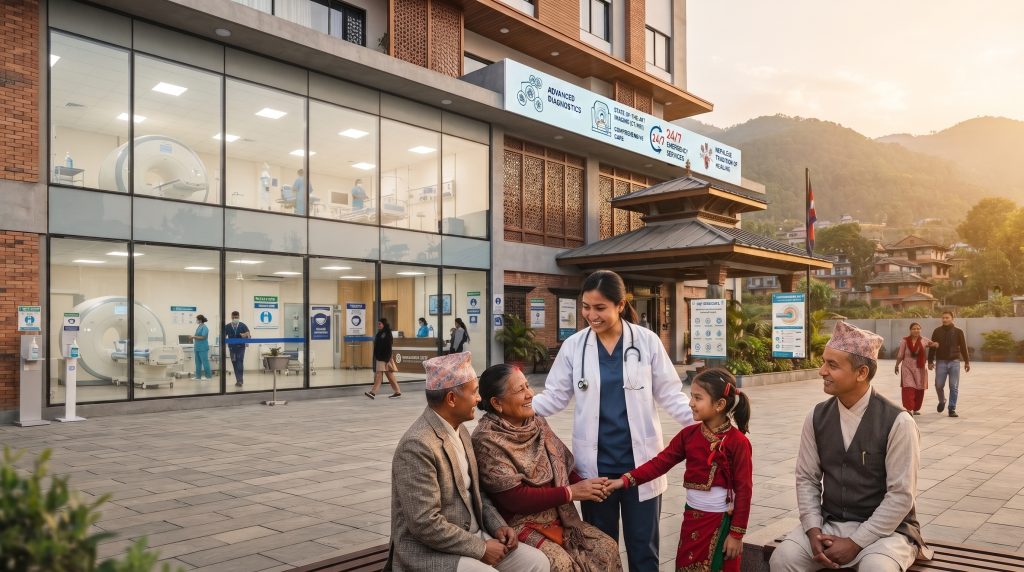
When planning medical treatment abroad, one of the biggest questions patients ask is: “Is healthcare in Nepal safe for international patients?”
The answer is yes—provided you choose the right hospital, qualified specialists, and a trusted medical assistance partner.
Nepal has made significant progress in healthcare infrastructure, with internationally trained doctors, modern multi-specialty hospitals, and advanced medical technology serving both local and international patients. Understanding local quality standards, specific hospital reputations, patient safety protocols, and post-treatment support is essential before making your decision.
Why International Patients Choose Healthcare in Nepal
Nepal has become an emerging destination for affordable and high-quality healthcare, attracting patients from neighboring countries, expatriates, and adventure travelers.
- Affordable Treatment Costs: Medical procedures in Nepal are significantly cheaper than in Western nations or even neighboring medical tourism hubs, without compromising on clinical standards.
- Globally Trained Specialists: Many top specialists have completed fellowships and advanced training in the USA, UK, India, Australia, and Europe.
- Advanced Private Facilities: Modern private hospitals are equipped with high-end diagnostic and surgical technology.
- Zero to Minimal Waiting Times: Direct access to consultations and surgeries avoids the long wait lists common in many public healthcare systems.
- English-Fluent Care: English is the default medium of instruction for medical education in Nepal, meaning doctors, nurses, and administrative staff communicate fluently.
High-Quality Specialty Care & Leading Hospitals
The safety of your medical journey depends on selecting a premier institution. Leading private hospitals in Kathmandu offer specialized clinical care matching international protocols:
| Specialty Area | Key Advanced Procedures | Recommended Hospital |
| Cardiology & Cardiothoracic | Angioplasty, CABG (bypass), pacemaker implantation | Nepal Mediciti, Norvic International Hospital |
| Orthopedics & Joint Care | Total hip/knee replacement, arthroscopic ligament reconstruction | B&B Hospital, Grande International Hospital |
| Travel & Wilderness Medicine | High-altitude sickness, frostbite, tropical infectious diseases | CIWEC Hospital |
| Neurology & Neurosurgery | Neuro-navigation guided brain and spinal surgeries | Nepal Mediciti, Grande International Hospital |
| Organ Transplants | Complex renal (kidney) transplant surgeries | Nepal Mediciti (completed 100+ successful transplants) |
Safety Standards & Hospital Accreditation
To ensure patient safety, look for hospitals that maintain external quality benchmarks:
- NABH International Accreditation: Nepal Mediciti is the first hospital in Nepal to be accredited by the National Accreditation Board for Hospitals & Healthcare Providers (NABH) International, assuring strict compliance with global infection control, medication safety, and clinical governance guidelines.
- ISTM Certification: For travel health and emergency stabilization, CIWEC Hospital features a medical team certified by the International Society of Travel Medicine (ISTM).
- Emergency Air Evacuation: Hospitals like Grande International and Nepal Mediciti operate advanced pre-hospital care networks, utilizing ground and heli-rescue systems with rooftop helipads to transfer patients directly from remote trekking regions.
Common Safety Considerations for International Patients
1. Communication & Care Coordination
While English is widely spoken by medical professionals, navigating admission paperwork, insurance claims, and discharge can be overwhelming for a foreigner. A medical assistance provider bridges this gap.
2. Digital Portability of Medical Records
Ensure you bring a complete digital folder of your medical history, including:
- Previous prescriptions and laboratory reports.
- Imaging films or high-resolution copies (MRI, CT, X-Ray).
- Detailed notes from your local physician back home.
3. Post-Surgery Travel Clearance
High altitude and long flights can pose severe risks (such as deep vein thrombosis or wound dehiscing) after surgery. Your treating surgeon must explicitly clear you for flight travel before you book your return ticket.
How to Plan a Safe Treatment Journey
If you are planning to travel to Nepal for medical treatment, use this checklist to guide your preparation:
1.Select and Verify the Provider: Step 1: Clinical Due Diligence.
Research your chosen hospital credentials. Ensure they have international accreditations (like NABH) or specialized expertise in your required procedure. Request the curriculum vitae (CV) of your primary operating surgeon.
2.Arrange Pre-Travel Consultations: Step 2: Virtual Screening.
Coordinate a telemedicine consultation with the doctor in Nepal to discuss your condition, review diagnostic reports, and establish a clear, estimated treatment timeline.
3.Confirm Financial and Insurance Logistics: Step 3: Cost and Coverage.
Request a detailed, transparent cost estimate from the hospital’s international patient division. Verify if your travel or global medical insurance is accepted for cashless services or if you will need to pay out-of-pocket and claim reimbursement later.
4.Plan Recovery and Travel Clearance: Step 4: Post-Op Buffer.
Build a post-operative buffer into your travel plans. Book local accommodations near the hospital for the recovery period, and do not fly until your surgeon issues a formal “Fit to Fly” certificate.
Why Medical Assistance Services Matter
Navigating a foreign medical system while managing illness or recovery is highly stressful. A dedicated assistance team like Key Health Assist simplifies the journey:
- Direct Access: We connect you directly with elite departments at accredited institutions like Nepal Mediciti, Grande, and CIWEC.
- Logistical Coordination: We handle scheduling, ground and air transfers, medical visa support, and family accommodations.
- Continuous Follow-Up: We arrange seamless telemedicine check-ins and coordinate medical discharge files with your home physician to ensure safe recovery long after you leave Nepal.