
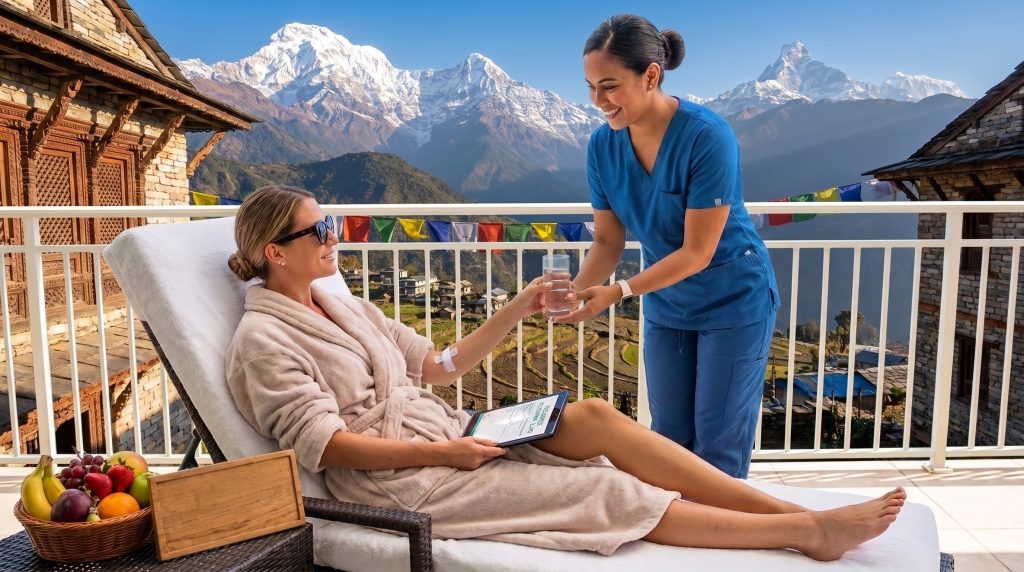
Imagine recovering not in a sterile hospital room, but on a sunlit terrace overlooking terraced hills, or taking a gentle walk past centuries-old temples once your treatment is behind you. For many patients, the idea of pairing essential medical care with a meaningful travel experience sounds like a stretch — something reserved for the very wealthy or the very lucky. But with the steady rise of medical tourism in Nepal, this is no longer a far-off idea. It’s a practical, increasingly popular choice for patients across the GCC, Middle East, Bangladesh, and the wider SAARC region.
At KeyHealthAssist.com, we help people do exactly this: combine international medical procedures in Nepal with the kind of travel experience that turns a necessary trip into something genuinely restorative. Here’s what that looks like in practice, and how to plan it well.
Medical Treatment in Nepal: Quality Care, Real Credentials
Nepal’s healthcare sector has grown substantially over the past decade. Kathmandu and other major cities are now home to hospitals and specialty centers equipped with modern diagnostic and surgical technology, staffed by physicians trained in India, the UK, the US, and other leading medical education systems.
Patients traveling for international medical procedures in Nepal commonly seek:
- Cardiac care and cardiology consultations
- Orthopedic surgery, including joint replacements
- General and laparoscopic surgery
- Fertility and reproductive health treatments
- Oncology consultations and treatment coordination
- Dental and cosmetic procedures
- Comprehensive health check-ups and diagnostics
What sets Nepal apart isn’t a narrow specialty list — it’s the combination of qualified specialists, shorter wait times than many home-country systems, and a cost structure that makes affordable medical care in Nepal genuinely accessible without cutting corners on safety or outcomes. Facilities routinely follow internationally recognized clinical protocols, and many physicians maintain active affiliations or training ties with hospitals abroad.
For patients coming from the Gulf, Middle East, Bangladesh, and SAARC countries, this means access to serious medical expertise at a fraction of the cost typically seen in Western countries or even some regional private hospitals — without sacrificing the quality of care.
Medical Treatment in Nepal: Quality Care, Real Credentials
Ask anyone who has spent even a few days in Nepal, and they’ll tell you: it’s a country that works on you slowly. Yes, there’s Everest and the Himalayan range — but Nepal’s appeal runs much deeper than its skyline.
- Culture and spirituality: Kathmandu Valley alone holds seven UNESCO World Heritage Sites, including Pashupatinath Temple, Boudhanath Stupa, and the historic Durbar Squares of Kathmandu, Patan, and Bhaktapur.
- Nature and serenity: Beyond trekking routes, Nepal offers gentle nature experiences — lakeside towns like Pokhara, quiet hillside retreats, and botanical gardens ideal for slow, low-impact recovery walks.
- Wellness traditions: Nepal’s long-standing Ayurvedic and yoga traditions feed directly into a growing wellness tourism scene, with retreats and spas designed around rest and restoration.
- Warm hospitality: Nepali hospitality is famously warm, and English is widely spoken in medical and tourism sectors, easing communication for international patients.
This is a destination built for reflection and recovery — not just adventure.
Combining Treatment and Vacation: How to Plan It Right
Successfully blending a medical trip with a vacation comes down to sequencing and realistic expectations. Here’s the general approach we recommend to clients:
1. Medical consultation first. Before any travel is booked, your treatment plan, expected recovery timeline, and any activity restrictions should be clearly established with your medical team.
2. Build the itinerary around recovery, not around it. Rather than planning sightseeing before recovery windows are confirmed, the vacation portion should be scheduled after your care team confirms you’re cleared for light activity. For minor procedures, this might mean gentle exploration within days. For more involved surgery, it may mean a quieter recovery period first, followed by low-exertion cultural visits later in the trip.
3. Factor in pre- and post-operative care. This includes pre-op diagnostics, the procedure itself, in-hospital recovery, follow-up consultations, and any necessary check-ins before international travel home. Building buffer days around each of these stages prevents a rushed, stressful trip.
4. Plan travel logistics with medical realities in mind. Airport transfers suited to a recovering patient, accessible accommodation, proximity to the treating hospital, and a support contact on the ground all matter more than they might for a typical vacation.
This is precisely where a coordinated travel for surgery in Nepal plan — rather than an ad hoc one — makes the difference between a stressful trip and a genuinely restorative one.
The Benefits of Recovery in Nepal
There’s a growing body of interest in how environment affects healing, and Nepal offers a setting that’s hard to replicate elsewhere. Recovering surrounded by mountain views, quiet gardens, and unhurried pace of life is a markedly different experience than recovering in a busy home environment where responsibilities pull at your attention.
Patients often describe:
- Lower stress levels during recovery, aided by scenic, calm surroundings
- The mental benefit of “getting away” while still prioritizing health
- Gentle reintroduction to activity through short, scenic walks
- A sense that the trip had meaning beyond the medical necessity that prompted it
Recovery in Nepal isn’t about pushing physical limits — it’s about healing in a setting that supports rest rather than working against it.
How KeyHealthAssist.com Supports You, Start to Finish
Coordinating medical travel across borders involves a lot of moving parts: hospital selection, specialist matching, cost estimates, visa guidance, accommodation, transport, and follow-up care. Managing all of this alone — especially while dealing with a health concern — adds unnecessary stress.
KeyHealthAssist.com exists to remove that burden. Our support includes:
- Hospital and specialist matching based on your specific medical needs and budget
- Transparent cost estimates before you travel, so there are no surprises
- Travel and visa coordination, including accommodation suited to recovery needs
- On-the-ground support throughout your stay in Nepal
- Post-treatment follow-up coordination, even after you’ve returned home
We work with patients from the GCC, Middle East, Bangladesh, and across the SAARC region to build a plan that treats both the medical need and the human experience around it as equally important. You can learn more about our full range of services, or read through patient experiences, to see how this has worked for others in your situation.
Bringing It All Together
Combining medical treatment with a Nepal vacation isn’t about squeezing in sightseeing around a hospital stay — it’s about choosing a destination where quality healthcare and a genuinely restorative environment exist side by side. With Nepal’s growing medical infrastructure, skilled professionals, extraordinary natural and cultural landscape, and significantly lower costs than Western healthcare systems, it’s an option worth serious consideration.
If you’re weighing your options for an upcoming procedure, reach out to KeyHealthAssist.com. Let us help you plan a journey that takes care of your health — and gives you something meaningful to carry home with you, too.